
Veepeak In Stock
Veepeak OBDCheck BLE Bluetooth OBD II Scanner for iOS & Android, Car Wireless Check Engine Light Code Reader Diagnostic Tool
$31.98 View on Amazon
Compare two auto loan offers side by side to find the better deal. See which loan has lower monthly payments, less total interest, and the lowest total cost instantly.
Using Loan A Amount: $25,000, Loan A Rate: 6.5, Loan A Term: 5, Loan B Amount: $25,000:
The estimated Better Overall Value is Loan B (Saves $1,146 in total cost).
| Result | Value |
|---|---|
| Better Overall Value | Loan B |
| Loan A Payment | $489 |
| Loan B Payment | $783 |
| Loan A Interest | $4,349 |
| Loan B Interest | $3,203 |
Adjust the values in the calculator above for your own scenario.
Preparing Auto Loan Comparison...
Every calculator is built using industry-standard formulas, validated against authoritative sources, and reviewed for accuracy against our published methodology. All calculations run privately in your browser - no data is stored or shared.
Educational tool only -- not financial, tax, or legal advice. Consult a licensed professional for decisions about your situation.
When you are financing a car, the difference between two loan offers rarely looks dramatic on the surface -- maybe a 2% rate gap or a 12-month term difference. This calculator puts both offers side by side so you can see the actual dollar impact: which loan costs less each month, how much total interest each option charges, and what the total out-of-pocket cost is over the full term. Dealers, banks, and credit unions each price loans differently, and a side-by-side comparison is the fastest way to identify the better deal before you sign anything.
Each loan is calculated independently using the standard amortizing loan formula:
Monthly Payment (M) = P x [r(1 + r)^n] / [(1 + r)^n - 1]
Where P is the principal, r is the monthly interest rate (annual APR / 12), and n is the number of monthly payments. Total interest equals (M x n) - P. Total cost equals M x n. The calculator runs both formulas simultaneously and displays the dollar difference in each category so you can see at a glance which loan is cheaper and by how much.
Example 1 -- Dealer financing vs. credit union A buyer finances $28,000 for a mid-size sedan. The dealer offers 7.2% for 72 months; the credit union offers 4.8% for 60 months. Dealer: $479/month, $6,504 interest, $34,504 total. Credit union: $526/month, $3,568 interest, $31,568 total. Paying $47 more per month saves $2,936 in total cost -- the credit union wins easily.
Example 2 -- Same rate, different terms A buyer has a $22,000 loan at 5.5% and is comparing 48-month vs. 60-month terms. At 48 months: $504/month, $2,203 total interest. At 60 months: $421/month, $3,270 total interest. Choosing the shorter term costs $83 more per month but saves $1,067 overall and pays off the car a year sooner.
Example 3 -- Promotional 0% financing vs. cash rebate A dealer offers either 0% for 60 months or a $2,500 rebate with 6% financing on a $35,000 vehicle. At 0%: $583/month, $0 interest, $35,000 total. With rebate at 6%: $619/month on $32,500, $4,618 interest, $37,118 total. The 0% option saves $2,118 even though the monthly payment is lower with the rebate deal -- the math favors 0% financing here.
| Loan Amount | APR | Term | Monthly Payment | Total Interest | Total Cost |
|---|---|---|---|---|---|
| $25,000 | 4.0% | 48 mo | $565 | $1,119 | $26,119 |
| $25,000 | 4.0% | 60 mo | $460 | $1,621 | $26,621 |
| $25,000 | 7.0% | 60 mo | $495 | $4,703 | $29,703 |
| $30,000 | 4.5% | 60 mo | $559 | $3,549 | $33,549 |
| $30,000 | 6.9% | 72 mo | $510 | $6,717 | $36,717 |
| $35,000 | 5.5% | 60 mo | $671 | $5,272 | $40,272 |
| $35,000 | 5.5% | 72 mo | $575 | $6,419 | $41,419 |
| $40,000 | 6.0% | 72 mo | $664 | $7,812 | $47,812 |
| $45,000 | 7.5% | 84 mo | $699 | $13,719 | $58,719 |
Auto loans are the second-largest debt most Americans carry after mortgages. The Federal Reserve reports average auto loan balances of approximately $23,000 for used vehicles and $41,000 for new vehicles. The gap between top-tier and mid-tier credit rates is typically 4-6 percentage points, meaning a buyer with a 620 credit score pays roughly $4,000-$6,000 more in interest over a 60-month term on a $35,000 vehicle compared to a buyer with a 750 score. Credit unions consistently offer rates 0.5-2% below large banks according to NCUA data, making pre-approval from a credit union the single most effective step a buyer can take before entering a dealership.
Auto Loan Calculator: Try our free auto loan calculator for instant results.
Auto Lease Calculator: Try our free auto lease calculator for instant results.
Auto Insurance Calculator: Try our free auto insurance calculator for instant results.
Car Affordability Calculator: Try our free car affordability calculator for instant results.
Fuel Cost Calculator: Try our free fuel cost calculator for instant results.
Loan Vs Lease Calculator: Try our free loan vs lease calculator for instant results.
Copy this citation for papers, articles, or coursework:
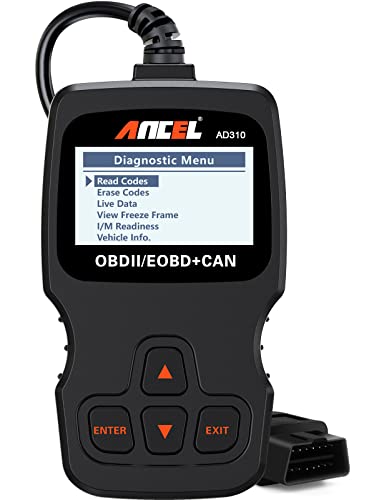
Alex Crabinsky. "Auto Loan Comparison." Numeraty, February 23, 2026, https://numeraty.com/auto-loan-comparison/ Plug-in scanners read check-engine codes and live data so you can diagnose issues, or inspect a used car, before paying a shop. Wired and Bluetooth options.
As an Amazon Associate, we earn from qualifying purchases. Prices and availability are subject to change. Prices checked Sep 9, 2026.

Free Annual Car Expense Calculator - get a full-year breakdown of every cost associated with owning your vehicle.
Auto & VehicleEstimate your auto insurance premium based on vehicle value, driver age, credit score, coverage level, deductible, and mileage. Understand how each factor affects your rate.
Auto & VehicleCalculate your monthly lease payment, total lease cost, and finance charges based on MSRP, negotiated price, residual value, and money factor. Compare lease offers confidently.
Auto & VehicleCalculate your 2026 auto loan payment with current rates. Compare new and used car financing, see total interest costs, and find the best loan term.
Auto & VehicleCalculate your monthly auto loan payment, total interest, and total cost based on vehicle price, down payment, interest rate, and loan term. Compare financing scenarios instantly.
Auto & VehicleFree Auto Refinance Calculator - see how much you can save by refinancing your car loan at a lower rate. Compare payments and total cost instantly.
Auto & VehicleFind out how much car you can afford based on your monthly budget, down payment, trade-in value, interest rate, and loan term. Work backward from your budget to find your buying power.
Auto & VehicleFree Car Depreciation Calculator - see how your vehicle loses value year by year. Plan the best time to sell or trade in.
Auto & VehicleFree Car Maintenance Calculator - estimate annual maintenance costs by car type, age, and mileage. Set a smart monthly savings goal.
Auto & VehicleFree Car Sales Tax Calculator - calculate the sales tax on a vehicle purchase including trade-in credits and state/local rates.
Auto & VehicleFree Car Trade-In Calculator - compare trading in at a dealer versus selling privately to see which nets you more money.
Auto & VehicleFree Car vs Transit Calculator - compare the annual cost of driving versus public transit and occasional rideshares.