
Veepeak In Stock
Veepeak OBDCheck BLE Bluetooth OBD II Scanner for iOS & Android, Car Wireless Check Engine Light Code Reader Diagnostic Tool
$31.98 View on Amazon
Calculate your monthly lease payment, total lease cost, and finance charges based on MSRP, negotiated price, residual value, and money factor. Compare lease offers confidently.
Using Vehicle MSRP: $35,000, Negotiated Price: $33,000, Down Payment: $2,000, Lease Term: 36 mo:
The estimated Monthly Lease Payment is $452 (Before taxes).
| Result | Value |
|---|---|
| Monthly Lease Payment | $452 |
| Total Lease Cost | $18,273 |
| Equivalent APR | 6% |
| Residual Value | $19,250 |
| Depreciation Cost | $11,750 |
Adjust the values in the calculator above for your own scenario.
Preparing Auto Lease Calculator...
Every calculator is built using industry-standard formulas, validated against authoritative sources, and reviewed for accuracy against our published methodology. All calculations run privately in your browser - no data is stored or shared.
Educational tool only -- not financial, tax, or legal advice. Consult a licensed professional for decisions about your situation.
A lease payment is built from two components -- the cost of the vehicle's depreciation during your term and the financing charge on the capital -- but dealers rarely explain the math in plain terms. This calculator makes the structure transparent: enter the MSRP, your negotiated price, down payment, lease term, residual value percentage, and money factor to see your exact monthly payment, total lease cost, and how much of each payment is depreciation versus finance charge. With this breakdown, you can compare lease offers from different dealers on equal footing and identify where the cost differences actually come from.
A lease payment has two distinct components:
Depreciation Charge = (Negotiated Price - Residual Dollar Value) / Lease Term (months)
Finance Charge = (Negotiated Price + Residual Dollar Value) x Money Factor
Monthly Payment = Depreciation Charge + Finance Charge
Where:
For a vehicle with a $38,000 negotiated price, $19,000 residual (50% of $38,000 MSRP), 36-month term, and money factor of 0.0022:
The money factor of 0.0022 equates to 5.28% APR (0.0022 x 2,400). Knowing the APR equivalent lets you evaluate whether the lease's implied interest rate is competitive with a loan.
Example 1 -- Honda CR-V, standard 36-month lease. MSRP $35,500, negotiated to $33,800. Residual: 57% = $20,235. Money factor: 0.0019 (4.56% APR). Down payment: $2,500. Term: 36 months.
Example 2 -- Luxury SUV with high money factor. MSRP $62,000, negotiated to $59,000. Residual: 48% = $29,760. Money factor: 0.0032 (7.68% APR). Down: $3,000. Term: 36 months.
Example 3 -- Comparing lease vs. buy on the same vehicle. Marcus is leasing a $42,000 sedan at 55% residual, 0.0024 money factor (5.76% APR), 36 months, $2,000 down. His lease payment is $536/month and total lease cost is $21,296. Alternatively, buying with $4,000 down at 5.9% over 60 months gives a payment of $719/month and total cost of $47,140 -- minus an estimated $25,000 trade-in value at year 5, leaving a net cost of $22,140. The lease is slightly cheaper on 3-year net cost, but Marcus owns nothing at lease end and must re-enter the market. If he plans to keep the car 5+ years, buying wins by roughly $4,000-$8,000.
| MSRP | Negotiated | Down | Term | Residual % | Money Factor | Dep. Charge | Finance Charge | Monthly Pmt | Total Cost |
|---|---|---|---|---|---|---|---|---|---|
| $28,000 | $26,500 | $1,500 | 36 mo | 58% | 0.0018 | $390 | $71 | $461 | $18,096 |
| $35,000 | $33,000 | $2,000 | 36 mo | 55% | 0.0022 | $479 | $108 | $587 | $23,132 |
| $35,000 | $33,000 | $2,000 | 36 mo | 55% | 0.0028 | $479 | $138 | $617 | $24,212 |
| $42,000 | $39,500 | $2,500 | 36 mo | 56% | 0.0020 | $579 | $126 | $705 | $27,680 |
| $48,000 | $45,000 | $3,000 | 36 mo | 52% | 0.0025 | $778 | $174 | $952 | $37,272 |
| $55,000 | $52,000 | $4,000 | 36 mo | 50% | 0.0022 | $878 | $172 | $1,050 | $41,800 |
| $35,000 | $33,000 | $2,000 | 24 mo | 65% | 0.0022 | $760 | $116 | $876 | $23,024 |
| $35,000 | $33,000 | $2,000 | 48 mo | 42% | 0.0022 | $400 | $101 | $501 | $26,048 |
Accepting the MSRP as the capitalized cost without negotiating. Dealers often present lease payments based on full MSRP, but the negotiated price is just as negotiable on a lease as on a purchase. On a $40,000 vehicle, negotiating $2,000 off reduces your monthly payment by approximately $55/month -- saving $1,980 over a 36-month lease. Many buyers skip this step because "it is just a lease" and leave real money on the table.
Not converting the money factor to an APR. A money factor of 0.0030 sounds tiny, but it equates to 7.2% APR -- more than most buyers would accept on a conventional auto loan. Multiply any money factor by 2,400 before comparing it to current loan rates. If your credit union is offering 5.5% auto loans and the dealer's money factor implies 7.8% APR, that money factor is inflated and worth questioning.
Making a large down payment (capitalized cost reduction) on a lease. A $5,000 cap cost reduction lowers your payment by about $139/month on a 36-month lease. But if the car is totaled in month 2, the insurance company pays the residual to the leasing company -- and your $5,000 is gone. Keep cash outlay at signing minimal (ideally first month + security deposit only) and keep the rest in savings where it is recoverable.
Ignoring mileage overage penalties when calculating total cost. Standard leases allow 10,000-12,000 miles/year with overage penalties of $0.15-$0.30/mile. If you drive 15,000 miles/year on a 12,000/year lease for 36 months, you owe 9,000 excess miles at $0.25/mile = $2,250 at turn-in -- a 12% increase in total lease cost that never appeared in the monthly payment.
Lease deals in early 2026 are more varied than in 2023-2024, when elevated interest rates pushed money factors above 0.003 on most brands. Several manufacturers -- Honda, Toyota, and Hyundai -- have reintroduced subsidized lease programs with money factors in the 0.0012-0.0020 range (2.9-4.8% APR equivalent) on select models to move inventory. These captive finance incentives make manufacturer-sponsored leases particularly competitive right now relative to bank-financed purchases. Residual values on EVs have softened 4-8 percentage points from 2022 highs as more EV models enter the market and used EV prices have normalized, which has raised EV lease payments. Conversely, trucks and popular crossovers still carry residuals of 55-65% at 36 months, keeping their lease payments relatively low per dollar of vehicle price. If a manufacturer's lease deal shows an unusually low money factor AND a high residual, it is worth running the numbers -- these periodically represent genuine savings of $100-$150/month versus market financing.
Auto Loan Calculator: Try our free auto loan calculator for instant results.
Auto Loan Comparison: Try our free auto loan comparison for instant results.
Auto Insurance Calculator: Try our free auto insurance calculator for instant results.
Car Affordability Calculator: Try our free car affordability calculator for instant results.
Fuel Cost Calculator: Try our free fuel cost calculator for instant results.
Loan Vs Lease Calculator: Try our free loan vs lease calculator for instant results.
Copy this citation for papers, articles, or coursework:
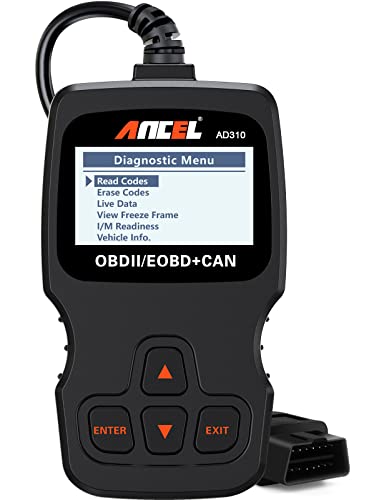
Alex Crabinsky. "Auto Lease Calculator." Numeraty, February 23, 2026, https://numeraty.com/auto-lease-calculator/ Plug-in scanners read check-engine codes and live data so you can diagnose issues, or inspect a used car, before paying a shop. Wired and Bluetooth options.
As an Amazon Associate, we earn from qualifying purchases. Prices and availability are subject to change. Prices checked Sep 9, 2026.

Free Annual Car Expense Calculator - get a full-year breakdown of every cost associated with owning your vehicle.
Auto & VehicleEstimate your auto insurance premium based on vehicle value, driver age, credit score, coverage level, deductible, and mileage. Understand how each factor affects your rate.
Auto & VehicleCalculate your 2026 auto loan payment with current rates. Compare new and used car financing, see total interest costs, and find the best loan term.
Auto & VehicleCalculate your monthly auto loan payment, total interest, and total cost based on vehicle price, down payment, interest rate, and loan term. Compare financing scenarios instantly.
Auto & VehicleCompare two auto loan offers side by side to find the better deal. See which loan has lower monthly payments, less total interest, and the lowest total cost instantly.
Auto & VehicleFree Auto Refinance Calculator - see how much you can save by refinancing your car loan at a lower rate. Compare payments and total cost instantly.
Auto & VehicleFind out how much car you can afford based on your monthly budget, down payment, trade-in value, interest rate, and loan term. Work backward from your budget to find your buying power.
Auto & VehicleFree Car Depreciation Calculator - see how your vehicle loses value year by year. Plan the best time to sell or trade in.
Auto & VehicleFree Car Maintenance Calculator - estimate annual maintenance costs by car type, age, and mileage. Set a smart monthly savings goal.
Auto & VehicleFree Car Sales Tax Calculator - calculate the sales tax on a vehicle purchase including trade-in credits and state/local rates.
Auto & VehicleFree Car Trade-In Calculator - compare trading in at a dealer versus selling privately to see which nets you more money.
Auto & VehicleFree Car vs Transit Calculator - compare the annual cost of driving versus public transit and occasional rideshares.