
AstroAI In Stock
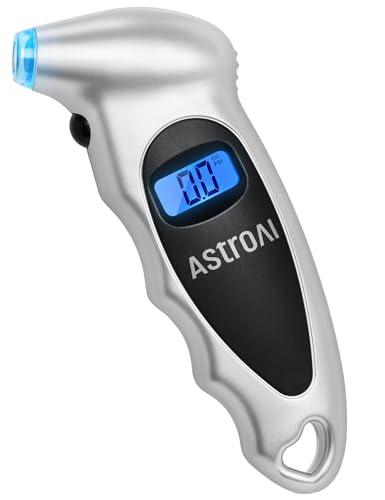
AstroAI L7 Tire Inflator Portable Air Compressor,150 PSI Cordless Bike Pump
$22.99 $39.99
−43%
View on Amazon
Estimate fuel cost for any trip or commute based on distance, MPG, and gas price. See total gallons needed, cost per mile, and round-trip expenses instantly.
Using Distance: 300, Fuel Efficiency: 28, Gas Price: 3.5:
The estimated Total Fuel Cost is $38.
| Result | Value |
|---|---|
| Total Fuel Cost | $38 |
| Gallons Needed | 10.7 gal |
| Cost Per Mile | $0.125 |
| Round Trip Cost | $75 |
Adjust the values in the calculator above for your own scenario.
Preparing Fuel Cost Calculator...
Every calculator is built using industry-standard formulas, validated against authoritative sources, and reviewed for accuracy against our published methodology. All calculations run privately in your browser - no data is stored or shared.
Educational tool only -- not financial, tax, or legal advice. Consult a licensed professional for decisions about your situation.
This calculator gives you an instant estimate of the fuel expense for any trip or commute -- enter the distance in miles, your vehicle's MPG, and the current gas price to see total gallons needed, one-way and round-trip cost, and cost per mile. It is equally useful for budgeting a cross-country road trip, figuring out your true monthly commute cost, or comparing the operating expense of two different vehicles before you buy. Gas prices and fuel efficiency together determine one of the largest variable costs of vehicle ownership, and most drivers underestimate what they actually spend.
The math is direct:
Gallons Needed = Distance (miles) / MPG
Total Fuel Cost = Gallons Needed x Gas Price per Gallon
Cost per Mile = Gas Price / MPG
Round-Trip Cost = Total Fuel Cost x 2
For a 250-mile trip in a vehicle getting 30 MPG at $3.60/gallon: 250 / 30 = 8.33 gallons, 8.33 x $3.60 = $30.00 one-way, $60.00 round-trip, and $0.12 per mile. The cost-per-mile figure is particularly useful -- the IRS standard mileage rate for 2026 is $0.67/mile, which covers fuel, depreciation, insurance, and maintenance. Fuel alone typically accounts for $0.09-$0.16 of that, depending on your vehicle.
Example 1 -- Daily commuter. Rachel drives 22 miles each way to work in a 2022 Honda Accord averaging 34 MPG combined. At $3.55/gallon, her one-way cost is $2.30 and her round trip is $4.60. Multiplied by 250 working days, her annual commute fuel cost is $1,150. If she upgraded to a vehicle getting 42 MPG, the same commute would cost $930/year -- saving $220 annually.
Example 2 -- Summer road trip. The Rodriguez family is driving from Dallas to Denver, roughly 1,050 miles each way, in a Ford Explorer averaging 24 MPG highway. At $3.70/gallon, the one-way fuel cost is $161.88 and the round trip is $323.75. Adding a 10% buffer for city driving around Denver and detours puts the realistic budget at $356. Knowing this number in advance lets them allocate the rest of their trip budget to lodging and activities.
Example 3 -- Vehicle comparison for a contractor. Mike drives 30,000 miles per year for work and is choosing between a pickup truck getting 20 MPG and a smaller van getting 28 MPG. At $3.65/gallon: the truck costs $5,475/year in fuel, the van costs $3,911/year -- a $1,564 annual difference. Over a 5-year vehicle ownership period, that gap is $7,820 before accounting for the potential MPG degradation of an aging engine.
| Distance | MPG | Gas Price | Gallons | One-Way Cost | Cost/Mile | Round Trip |
|---|---|---|---|---|---|---|
| 25 mi | 30 | $3.50 | 0.83 | $2.92 | $0.117 | $5.83 |
| 50 mi | 28 | $3.65 | 1.79 | $6.52 | $0.130 | $13.04 |
| 100 mi | 32 | $3.50 | 3.13 | $10.94 | $0.109 | $21.88 |
| 200 mi | 25 | $3.75 | 8.00 | $30.00 | $0.150 | $60.00 |
| 300 mi | 28 | $3.50 | 10.71 | $37.50 | $0.125 | $75.00 |
| 300 mi | 35 | $3.50 | 8.57 | $30.00 | $0.100 | $60.00 |
| 500 mi | 22 | $4.00 | 22.73 | $90.91 | $0.182 | $181.82 |
| 1,000 mi | 30 | $3.60 | 33.33 | $120.00 | $0.120 | $240.00 |
| 12,000 mi/yr | 28 | $3.50 | 428.6 | $1,500/yr | $0.125 | -- |
| 15,000 mi/yr | 22 | $3.75 | 681.8 | $2,557/yr | $0.170 | -- |
Using the EPA sticker MPG instead of your actual MPG. EPA estimates run 10-20% higher than real-world results for most drivers. A vehicle rated at 32 MPG combined often returns 26-28 MPG in daily mixed driving. Using the inflated EPA figure on a 15,000-mile annual budget underestimates fuel cost by $150-$300 per year. Check your trip computer or divide your last fill-up gallons into the miles driven since the previous fill.
Ignoring the highway vs. city MPG split on long trips. Highway driving is 15-25% more efficient than city driving for most vehicles. If your road trip includes significant city driving on both ends -- getting out of a major metro, for example -- factor in the lower city MPG rather than applying the highway rating to the whole trip. A vehicle rated 28 city / 38 highway will average closer to 31-33 MPG on a mixed trip, not 38.
Forgetting to multiply commute costs by working days. A $4.50 daily round-trip commute feels small, but over 250 working days that is $1,125/year -- and many drivers never consciously track it. When evaluating a job offer that requires a longer commute, run the full annual fuel cost and factor it into the compensation comparison.
Not accounting for fuel price volatility in long-term budgets. Gas prices in the US ranged from $2.80 to $5.00 per gallon between 2020 and 2026. For annual budgeting, use a price $0.30-$0.50 above the current price as a conservative estimate rather than locking in today's rate.
The average American drives roughly 13,500 miles per year according to the Federal Highway Administration. At the US average fuel economy of 28 MPG (2025 fleet average) and $3.60/gallon, that is 482 gallons and $1,735 in annual fuel spending. Regional variation is significant -- California drivers pay roughly $4.20-$4.80/gallon, pushing that same average driver's annual fuel bill to $2,025-$2,310. Drivers in Texas or the Gulf Coast region frequently pay $3.00-$3.30/gallon, dropping the same driver's cost to $1,445-$1,590. This $600-$800 regional spread is large enough to affect vehicle purchase decisions and relocation calculations. The calculator also helps quantify the real cost of remote work commuting decisions -- an employee choosing a job 35 miles away over one 8 miles away adds roughly $1,100/year in fuel cost alone at 28 MPG and $3.60/gallon.
Auto Loan Calculator: Try our free auto loan calculator for instant results.
Auto Lease Calculator: Try our free auto lease calculator for instant results.
Auto Loan Comparison: Try our free auto loan comparison for instant results.
Auto Insurance Calculator: Try our free auto insurance calculator for instant results.
Car Affordability Calculator: Try our free car affordability calculator for instant results.
Loan Vs Lease Calculator: Try our free loan vs lease calculator for instant results.
Copy this citation for papers, articles, or coursework:
Alex Crabinsky. "Fuel Cost Calculator." Numeraty, February 23, 2026, https://numeraty.com/fuel-cost-calculator/ Keeping tires at spec is one of the cheapest ways to protect the fuel costs above. Cordless inflators that top up anywhere.
As an Amazon Associate, we earn from qualifying purchases. Prices and availability are subject to change. Prices checked Sep 9, 2026.


Free Annual Car Expense Calculator - get a full-year breakdown of every cost associated with owning your vehicle.
Auto & VehicleEstimate your auto insurance premium based on vehicle value, driver age, credit score, coverage level, deductible, and mileage. Understand how each factor affects your rate.
Auto & VehicleCalculate your monthly lease payment, total lease cost, and finance charges based on MSRP, negotiated price, residual value, and money factor. Compare lease offers confidently.
Auto & VehicleCalculate your 2026 auto loan payment with current rates. Compare new and used car financing, see total interest costs, and find the best loan term.
Auto & VehicleCalculate your monthly auto loan payment, total interest, and total cost based on vehicle price, down payment, interest rate, and loan term. Compare financing scenarios instantly.
Auto & VehicleCompare two auto loan offers side by side to find the better deal. See which loan has lower monthly payments, less total interest, and the lowest total cost instantly.
Auto & VehicleFree Auto Refinance Calculator - see how much you can save by refinancing your car loan at a lower rate. Compare payments and total cost instantly.
Auto & VehicleFind out how much car you can afford based on your monthly budget, down payment, trade-in value, interest rate, and loan term. Work backward from your budget to find your buying power.
Auto & VehicleFree Car Depreciation Calculator - see how your vehicle loses value year by year. Plan the best time to sell or trade in.
Auto & VehicleFree Car Maintenance Calculator - estimate annual maintenance costs by car type, age, and mileage. Set a smart monthly savings goal.
Auto & VehicleFree Car Sales Tax Calculator - calculate the sales tax on a vehicle purchase including trade-in credits and state/local rates.
Auto & VehicleFree Car Trade-In Calculator - compare trading in at a dealer versus selling privately to see which nets you more money.
The average EV costs $12,000 more upfront than a comparable gas vehicle in 2026, but fuel and maintenance savings of $2,000-$3,500 per year mean most EV buyers break even in 4-6 years -- before accounting for the $7,500 federal tax credit.
9 min read autoThe 20/4/10 rule says: 20% down, finance for no more than 4 years, and keep total car costs under 10% of gross income. On a $75,000 salary, that limits you to roughly a $28,000 vehicle.
8 min read