
Casio Only 1 left in stock - order soon.
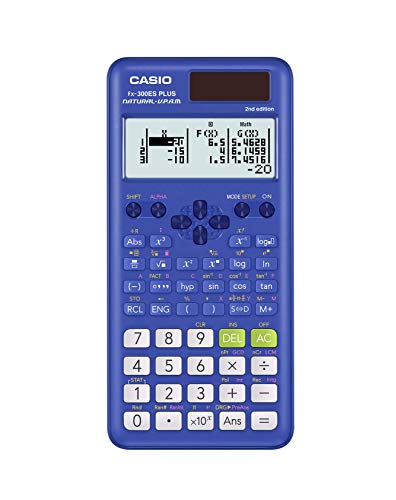
Casio fx-991ES Plus 2 Scientific Calculator with 417 Functions and Display, Natural
$32.30 View on Amazon
Free online Age Calculator -- find your exact age in years, months, days, weeks, and total days from your date of birth. Includes next birthday countdown and milestone tracking.
Using Birth Year: 1,990, Birth Month: June, Birth Day: 15:
The estimated Age is 36 years, 3 months, 7 days.
| Result | Value |
|---|---|
| Your Age | 36 years, 3 months, 7 days |
| Total Days | 13,248 |
| Total Weeks | 1,892 |
| Total Months | 435 |
| Next Birthday In | 266 days |
Adjust the values in the calculator above for your own scenario.
Preparing Age Calculator...
Every calculator is built using industry-standard formulas, validated against authoritative sources, and reviewed for accuracy against our published methodology. All calculations run privately in your browser - no data is stored or shared.
This age calculator gives you your exact age in years, months, and days, plus the same figure converted to total days, weeks, and months. It also shows a countdown to your next birthday. That level of precision matters more than most people realize -- insurance eligibility, retirement benefits, pediatric medication dosing, and immigration paperwork all hinge on exact age to the day, not just the year.
The calculator works by subtracting your birth date from today's date using a three-step method. First, it counts the full years that have elapsed. Then it counts remaining full months. Finally, it counts the leftover days -- if the current day of the month is earlier than your birth day, it borrows days from the previous month to keep the count accurate.
Total days = (Today's date - Birth date) counted in calendar days, accounting for leap years
For total weeks, divide total days by 7. For total months, divide by 30.4375 (the average calendar month accounting for leap years). Both are displayed automatically.
Someone born on July 4, 1990 and checking today -- April 10, 2026 -- has lived exactly 35 years, 9 months, and 6 days. In raw days, that's roughly 13,059 days, or about 1,865 weeks. Their next birthday is 85 days away. This kind of output is immediately useful if they're verifying age for a life insurance application or a retirement account eligibility check.
A child born on February 29, 2008 -- a leap year -- presents a tricky edge case. By April 10, 2026, they've had exactly 4 official February 29 birthdays on the calendar. Most legal systems treat March 1 as their official birthday in non-leap years, but the day count is unambiguous: they've been alive for 6,615 days regardless of how the calendar handles the birthday.
An employee hired on March 15, 2018 wants to know if they've hit their 8-year work anniversary. Entering March 15, 2018 as the birth date shows exactly 8 years, 0 months, and 26 days as of April 10, 2026 -- past the 8-year mark by 26 days, confirming they've reached that milestone and any associated vesting or benefits tied to it.
| Birth Date | Age as of Apr 10, 2026 | Total Days | Total Weeks | Next Birthday In |
|---|---|---|---|---|
| Jan 1, 2000 | 26 years, 3 months, 9 days | 9,596 | 1,371 | 266 days |
| Jul 4, 1990 | 35 years, 9 months, 6 days | 13,059 | 1,865 | 85 days |
| Dec 31, 1980 | 45 years, 3 months, 10 days | 16,536 | 2,362 | 265 days |
| Mar 15, 2010 | 16 years, 0 months, 26 days | 5,869 | 838 | 339 days |
| Sep 22, 1955 | 70 years, 6 months, 19 days | 25,768 | 3,681 | 165 days |
| Feb 29, 2000 | 26 years, 1 month, 10 days | 9,537 | 1,362 | 325 days |
| Jun 15, 1998 | 27 years, 9 months, 26 days | 10,161 | 1,452 | 66 days |
| Oct 1, 2005 | 20 years, 6 months, 9 days | 7,497 | 1,071 | 174 days |
Pediatricians calculate age in weeks and months for the first two years of a child's life to track growth percentiles. Immigration officials check exact age to the day to determine whether applicants qualify as minors. Actuaries use precise birth dates to calculate life expectancy adjustments for insurance pricing. HR departments track tenure dates to trigger stock vesting events, benefit eligibility, and mandatory retirement rules. Genealogists use age calculations to verify historical records -- if a census says someone was 43 in 1880, this calculator can confirm whether a claimed birth year is consistent.
Percentage Calculator: Try our free percentage calculator for instant results.
Fraction Calculator: Try our free fraction calculator for instant results.
Basic Calculator: Try our free basic calculator for instant results.
Scientific Calculator: Try our free scientific calculator for instant results.
Statistics Calculator: Try our free statistics calculator for instant results.
Square Root Calculator: Try our free square root calculator for instant results.
Copy this citation for papers, articles, or coursework:
Alex Crabinsky. "Age Calculator." Numeraty, February 23, 2026, https://numeraty.com/age-calculator/ Exam-approved Casio scientific calculators that handle the functions above.
As an Amazon Associate, we earn from qualifying purchases. Prices and availability are subject to change. Prices checked Sep 22, 2026.

Free online Basic Calculator -- perform addition, subtraction, multiplication, division, exponents, and modulo operations. Instant results with up to 10 decimal places of precision.
Math & ScienceFree online Binary, Hexadecimal, and Decimal Converter -- convert between base-2, base-10, and base-16 number systems instantly. Essential for programming, computer science, and digital electronics.
Math & ScienceFree online Date Calculator -- find the exact number of days, weeks, months, and years between any two dates. Calculate date differences for project planning, contracts, age verification, and event countdowns.
Math & ScienceFree online Fraction Calculator -- add, subtract, multiply, and divide fractions with automatic simplification. Shows results as fractions and decimals. Supports mixed numbers and improper fractions.
Math & ScienceFree Fuel Consumption Converter -- convert between MPG (US), MPG (UK), L/100km, and km/L. Compare fuel economy ratings across US, UK, and metric systems for any vehicle.
Math & ScienceFree online GPA Calculator -- compute your grade point average from letter grades and credit hours. Supports weighted and unweighted GPA on a 4.0 scale with instant results.
Math & ScienceFree online Grade Calculator -- compute your weighted course grade from assignments, exams, and projects. Find out what score you need on your final exam to reach your target grade.
Math & ScienceFree online Logarithm Calculator -- compute common log (base 10), natural log (ln), and logarithms of any base. Includes log rules, formulas, and real-world applications.
Math & ScienceFree online Matrix Calculator -- perform matrix addition, subtraction, multiplication, transposition, and find determinants and inverses. Supports 2x2 and 3x3 matrices with step-by-step results.
Math & ScienceFree online Mean, Median, and Mode Calculator -- enter a data set to instantly compute all three measures of central tendency plus range and count. Includes explanations of when to use each measure.
Math & ScienceFree online Percentage Calculator -- find a percentage of a number, calculate percentage increase or decrease, compute percentage change, and determine percentage difference. Instant results with formulas and examples.
Math & ScienceFree online Probability Calculator -- compute single event probability, combined probability for independent and dependent events, and complementary probability. Includes formulas and practical examples.