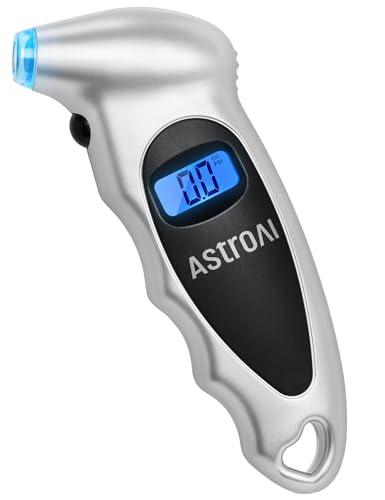
AstroAI In Stock
AstroAI Digital Tire Pressure Gauge 150PSI, ±1PSI Accuracy for Car Truck
$6.99 $12.99
−46%
View on Amazon
Free Pressure Converter - calculate instantly with our online tool. No signup required. Accurate unit converters calculations with real-time results.
Preparing Pressure Converter...
Every calculator is built using industry-standard formulas, validated against authoritative sources, and reviewed for accuracy against our published methodology. All calculations run privately in your browser - no data is stored or shared.
This pressure converter transforms values between eight common units: PSI, bar, atmospheres (atm), kilopascals (kPa), pascals (Pa), millimeters of mercury (mmHg), torr, and inches of mercury (inHg). Pressure shows up in more daily contexts than most people realize -- tire gauges, weather apps, blood pressure cuffs, hydraulic lines, and scuba equipment all use different units. Getting the conversion wrong can mean underinflated tires, a misread weather report, or a misunderstood medical reading. This tool eliminates that confusion with instant, accurate conversions across all eight units.
All conversions route through the pascal (Pa) as the SI base unit. The input is multiplied by its source factor to produce pascals, then divided by the target unit's factor to get the result.
Key conversion factors to pascals:
Example formula -- PSI to bar: PSI × 6,894.76 = Pa, then Pa ÷ 100,000 = bar Shortcut: PSI ÷ 14.504 = bar
A driver checks his tire pressure with a US gauge reading 34 PSI, but his car's door-jamb sticker was printed in bar for a European market. Converting: 34 ÷ 14.504 = 2.34 bar. The manufacturer spec is 2.3 bar, so the tire is within 0.04 bar -- close enough. He tops off slightly and moves on.
A weather enthusiast in Chicago reads a barometric pressure of 29.85 inHg on her analog barometer and wants to compare it to the 1008.8 hPa reading on a digital station she just bought. Converting: 29.85 inHg × 3,386.39 = 101,085 Pa = 1010.9 hPa. The two readings differ by 2.1 hPa, which is within calibration tolerance for a consumer barometer.
A mechanical engineer is specifying a hydraulic system that must operate at 3,000 PSI. The European supplier quotes maximum working pressure in bar. Converting: 3,000 ÷ 14.504 = 206.8 bar. The supplier's 210-bar rated fitting has adequate margin, so the engineer approves the part.
| From | Value | To | Result |
|---|---|---|---|
| PSI | 14.696 | atm | 1.000 |
| PSI | 32 | bar | 2.207 |
| PSI | 32 | kPa | 220.6 |
| bar | 1 | PSI | 14.504 |
| atm | 1 | kPa | 101.325 |
| atm | 1 | mmHg | 760.0 |
| kPa | 100 | PSI | 14.50 |
| mmHg | 120 | kPa | 16.0 |
| inHg | 29.92 | atm | 1.000 |
| inHg | 29.92 | kPa | 101.3 |
Temperature Converter: Try our free temperature converter for instant results.
Length Converter: Try our free length converter for instant results.
Weight Converter: Try our free weight converter for instant results.
Volume Converter: Try our free volume converter for instant results.
Area Converter: Try our free area converter for instant results.
Speed Converter: Try our free speed converter for instant results.
Copy this citation for papers, articles, or coursework:
Alex Crabinsky. "Pressure Converter." Numeraty, February 23, 2026, https://numeraty.com/pressure-converter/ Correct pressure protects both fuel economy and tread life. Accurate digital gauges with live pricing.
As an Amazon Associate, we earn from qualifying purchases. Prices and availability are subject to change. Prices checked Sep 9, 2026.

Free Acceleration Converter - calculate instantly with our online tool. No signup required. Accurate unit converters calculations with real-time results.
Unit ConvertersFree Angle Converter - calculate instantly with our online tool. No signup required. Accurate unit converters calculations with real-time results.
Unit ConvertersFree Area Converter - calculate instantly with our online tool. No signup required. Accurate unit converters calculations with real-time results.
Unit ConvertersFree Case Converter - calculate instantly with our online tool. No signup required. Accurate unit converters calculations with real-time results.
Unit ConvertersFree Clothing Size Converter - convert between US, EU, UK, and Asian clothing sizes for men and women. Compare international size charts for tops, dresses, pants, and outerwear when shopping online.
Unit ConvertersFree Color Converter - convert between HEX, RGB, HSL, and HSV color formats instantly. Essential for web developers and designers working with CSS, design tools, and accessibility-compliant color palettes.
Unit ConvertersFree Cooking Converter - convert cups to grams, tablespoons to milliliters, ounces to grams, and more. Instantly translate between US, metric, and UK cooking measurements for accurate recipes.
Unit ConvertersFree Currency Converter - calculate instantly with our online tool. No signup required. Accurate unit converters calculations with real-time results.
Unit ConvertersFree Data Storage Converter - calculate instantly with our online tool. No signup required. Accurate unit converters calculations with real-time results.
Unit ConvertersFree Data Transfer Converter - calculate instantly with our online tool. No signup required. Accurate unit converters calculations with real-time results.
Unit ConvertersFree Density Converter - calculate instantly with our online tool. No signup required. Accurate unit converters calculations with real-time results.
Unit ConvertersFree Energy Converter - calculate instantly with our online tool. No signup required. Accurate unit converters calculations with real-time results.