
Casio Only 1 left in stock - order soon.
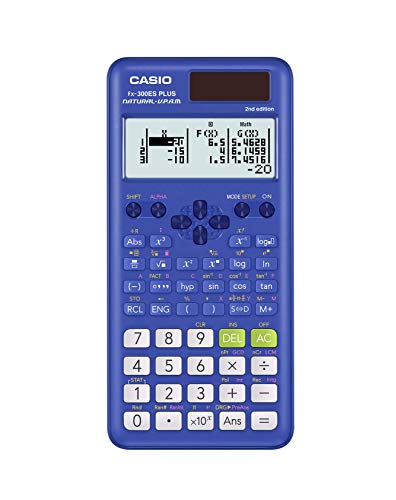
Casio fx-991ES Plus 2 Scientific Calculator with 417 Functions and Display, Natural
$32.30 View on Amazon
Free Acceleration Converter - calculate instantly with our online tool. No signup required. Accurate unit converters calculations with real-time results.
Preparing Acceleration Converter...
Every calculator is built using industry-standard formulas, validated against authoritative sources, and reviewed for accuracy against our published methodology. All calculations run privately in your browser - no data is stored or shared.
Acceleration measures how quickly velocity changes over time. The unit you encounter depends heavily on the field: physicists use meters per second squared (m/s²), aerospace engineers talk in g-force, automotive engineers quote 0-60 mph times, and geophysicists measure in Gal. This converter handles all of those units -- m/s², ft/s², g, cm/s², Gal, and in/s² -- letting you move between them without doing the arithmetic by hand.
All conversions route through a single base unit -- meters per second squared (m/s²). The tool multiplies the input value by the source unit's conversion factor to get m/s², then divides by the target unit's factor.
Key factors to m/s²:
So to convert 3.5 g to m/s²: 3.5 x 9.80665 = 34.32 m/s². To convert that same 34.32 m/s² to ft/s²: 34.32 / 0.3048 = 112.6 ft/s².
Example 1 -- Sports car acceleration in g and m/s² A sports car goes from 0 to 60 mph (0 to 96.6 km/h) in 4.0 seconds. The average acceleration is 96.6 / 3.6 / 4.0 = 6.71 m/s². Dividing by 9.80665 gives 0.68 g. That is a reasonable figure for a performance car -- above the 0.3-0.4 g of a family sedan but below the 1.0+ g of a Formula 1 car.
Example 2 -- Seismic measurement in Gal A seismometer records ground acceleration of 200 Gal during an earthquake. Converting to m/s²: 200 x 0.01 = 2.0 m/s². In g-force: 2.0 / 9.80665 = 0.204 g. Seismic intensity scales often use Gal because the values for typical earthquakes fall in convenient whole-number ranges (50-1000 Gal), avoiding the small decimals you would get in m/s².
Example 3 -- Centrifuge in a lab A laboratory centrifuge spins at 10,000 rpm with a rotor radius of 0.10 meters. The centripetal acceleration is v² / r, where v = 2π x 0.10 x (10000/60) = 104.7 m/s. Acceleration = (104.7)² / 0.10 = 109,662 m/s². In g-force: 109,662 / 9.80665 ≈ 11,182 g. This level of acceleration is used to separate blood components or pellet proteins in biochemistry.
| Unit | Symbol | Conversion to m/s² | Common Use |
|---|---|---|---|
| Meter per second squared | m/s² | 1.0 | Physics, SI standard |
| Foot per second squared | ft/s² | 0.3048 | Imperial engineering |
| Standard gravity | g | 9.80665 | Aerospace, automotive |
| Centimeter per second squared | cm/s² (Gal) | 0.01 | Geophysics, seismology |
| Inch per second squared | in/s² | 0.0254 | US mechanical engineering |
| Kilometer per hour per second | km/h/s | 0.27778 | Automotive performance |
| Mile per hour per second | mph/s | 0.44704 | US automotive specs |
| Milligal | mGal | 0.00001 | Precision gravimetry |
Acceleration is central to everything from car performance testing to structural engineering. In automotive testing, peak lateral g during cornering determines how far a driver can push a car before tires lose grip -- most passenger cars top out around 0.85 g, while track tires can sustain 1.5+ g. In structural engineering, buildings in earthquake zones are designed to withstand peak ground accelerations expressed in fractions of g (a common design target is 0.3-0.6 g for high-seismicity zones). In human physiology, the body tolerates sustained acceleration up to about 5 g before loss of consciousness becomes likely, which drives ejection seat design and fighter pilot training requirements.
Temperature Converter: Try our free temperature converter for instant results.
Length Converter: Try our free length converter for instant results.
Weight Converter: Try our free weight converter for instant results.
Volume Converter: Try our free volume converter for instant results.
Area Converter: Try our free area converter for instant results.
Speed Converter: Try our free speed converter for instant results.
Copy this citation for papers, articles, or coursework:
Alex Crabinsky. "Acceleration Converter." Numeraty, February 23, 2026, https://numeraty.com/acceleration-converter/ Exam-approved Casio scientific calculators that handle the functions above.
As an Amazon Associate, we earn from qualifying purchases. Prices and availability are subject to change. Prices checked Sep 22, 2026.

Free Angle Converter - calculate instantly with our online tool. No signup required. Accurate unit converters calculations with real-time results.
Unit ConvertersFree Area Converter - calculate instantly with our online tool. No signup required. Accurate unit converters calculations with real-time results.
Unit ConvertersFree Case Converter - calculate instantly with our online tool. No signup required. Accurate unit converters calculations with real-time results.
Unit ConvertersFree Clothing Size Converter - convert between US, EU, UK, and Asian clothing sizes for men and women. Compare international size charts for tops, dresses, pants, and outerwear when shopping online.
Unit ConvertersFree Color Converter - convert between HEX, RGB, HSL, and HSV color formats instantly. Essential for web developers and designers working with CSS, design tools, and accessibility-compliant color palettes.
Unit ConvertersFree Cooking Converter - convert cups to grams, tablespoons to milliliters, ounces to grams, and more. Instantly translate between US, metric, and UK cooking measurements for accurate recipes.
Unit ConvertersFree Currency Converter - calculate instantly with our online tool. No signup required. Accurate unit converters calculations with real-time results.
Unit ConvertersFree Data Storage Converter - calculate instantly with our online tool. No signup required. Accurate unit converters calculations with real-time results.
Unit ConvertersFree Data Transfer Converter - calculate instantly with our online tool. No signup required. Accurate unit converters calculations with real-time results.
Unit ConvertersFree Density Converter - calculate instantly with our online tool. No signup required. Accurate unit converters calculations with real-time results.
Unit ConvertersFree Energy Converter - calculate instantly with our online tool. No signup required. Accurate unit converters calculations with real-time results.
Unit ConvertersFree Flow Converter - calculate instantly with our online tool. No signup required. Accurate unit converters calculations with real-time results.