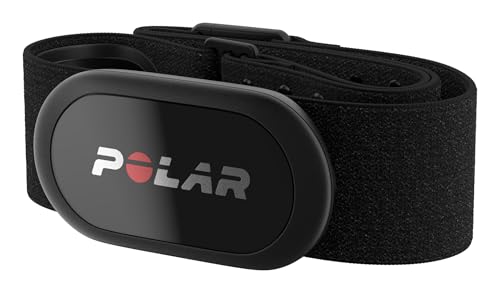
POLAR Only 1 left in stock - order soon.
Polar H10 Heart Rate Monitor Chest Strap - ANT + Bluetooth, Waterproof HR Sensor for Men and Women, Black, M-XXL
$95.58 $104.95
−9%
View on Amazon
Calculate your target heart rate zones for exercise with our free heart rate calculator. Uses the Tanaka formula and Karvonen method to determine your max heart rate and five personalized training zones based on age and resting heart rate.
Using Age: 30, Resting Heart Rate: 70:
The estimated Max Heart Rate is 187 bpm (Estimated using Tanaka formula).
| Result | Value |
|---|---|
| Max Heart Rate | 187 bpm |
| Warm Up | 129 – 140 bpm |
| Fat Burn | 140 – 152 bpm |
| Cardio | 152 – 164 bpm |
| Hard | 164 – 175 bpm |
| Peak | 175 – 187 bpm |
Adjust the values in the calculator above for your own scenario.
Preparing Heart Rate Calculator...
Every calculator is built using industry-standard formulas, validated against authoritative sources, and reviewed for accuracy against our published methodology. All calculations run privately in your browser - no data is stored or shared.
Exercising at the right intensity separates productive training from wasted effort. Go too easy and cardiovascular adaptations are minimal; go too hard too often and you accumulate fatigue without recovering. Heart rate zones give you a precise, objective measure of effort that removes the guesswork. This calculator uses your age and resting heart rate to compute your maximum heart rate and five personalized training zones, so every session has a clear target.
The calculator applies two formulas in sequence.
Step 1 -- Maximum heart rate (Tanaka formula): Max HR = 208 - (0.7 x age)
The Tanaka formula, published in the Journal of the American College of Cardiology, is more accurate than the older 220-minus-age method, particularly for people over 40.
Step 2 -- Training zones (Karvonen method): Target HR = (Heart Rate Reserve x Zone%) + Resting HR where Heart Rate Reserve (HRR) = Max HR - Resting HR
Incorporating resting heart rate into the calculation personalizes your zones. A fit 35-year-old with a resting HR of 48 bpm and a deconditioned 35-year-old with a resting HR of 82 bpm have the same Max HR but very different zone thresholds.
Example 1 -- 30-year-old with resting HR of 70 bpm Max HR = 208 - (0.7 x 30) = 187 bpm. HRR = 187 - 70 = 117 bpm. Fat Burn zone (60-70%): (117 x 0.60) + 70 = 140 bpm to (117 x 0.70) + 70 = 152 bpm.
Example 2 -- 45-year-old runner with resting HR of 55 bpm Max HR = 208 - (0.7 x 45) = 177 bpm. HRR = 177 - 55 = 122 bpm. Cardio zone (70-80%): (122 x 0.70) + 55 = 140 bpm to (122 x 0.80) + 55 = 153 bpm.
Example 3 -- 60-year-old sedentary adult with resting HR of 78 bpm Max HR = 208 - (0.7 x 60) = 166 bpm. HRR = 166 - 78 = 88 bpm. Warm-up zone (50-60%): (88 x 0.50) + 78 = 122 bpm to (88 x 0.60) + 78 = 131 bpm.
| Zone | Intensity | Karvonen % | Purpose | Feel |
|---|---|---|---|---|
| Zone 1 -- Warm-Up | Very light | 50-60% | Recovery, warm-up, cool-down | Could hold a full conversation |
| Zone 2 -- Fat Burn | Light-moderate | 60-70% | Endurance base, fat oxidation | Can speak in sentences but slightly breathless |
| Zone 3 -- Cardio | Moderate | 70-80% | Aerobic capacity improvement | Short phrases only; noticeably harder |
| Zone 4 -- Hard | Hard | 80-90% | Lactate threshold, speed work | Can say a few words; uncomfortable |
| Zone 5 -- Peak | Maximum | 90-100% | VO2 max intervals, sprint work | Cannot speak; unsustainable beyond 1-2 min |
Your five zones form a continuous spectrum from easy to all-out. Zone 2 (fat burn) is the workhorse of endurance training -- it stimulates mitochondrial density and fat oxidation without the recovery cost of harder zones. Zone 4 (hard) pushes lactate threshold, which is the most important determinant of race performance for endurance athletes. Zone 5 (peak) raises VO2 max but is taxing; most people need 48-72 hours to recover from a Zone 5 session.
If you are new to exercise or have a cardiovascular condition, consult a physician before beginning any program involving Zone 4 or Zone 5 intensities. Your doctor can advise on appropriate limits and whether a supervised exercise stress test is recommended before high-intensity training.
BMI Calculator: Try our free bmi calculator for instant results.
Body Fat Calculator: Try our free body fat calculator for instant results.
Calorie Calculator: Try our free calorie calculator for instant results.
Health Insurance Calculator: Try our free health insurance calculator for instant results.
Disability Insurance Calculator: Try our free disability insurance calculator for instant results.
Life Insurance Calculator: Try our free life insurance calculator for instant results.
Copy this citation for papers, articles, or coursework:
Alex Crabinsky. "Heart Rate Calculator." Numeraty, February 23, 2026, https://numeraty.com/heart-rate-calculator/ For accurate training zones a chest strap beats a wrist sensor. The Polar straps most runners and cyclists rely on.
As an Amazon Associate, we earn from qualifying purchases. Prices and availability are subject to change. Prices checked Sep 9, 2026.
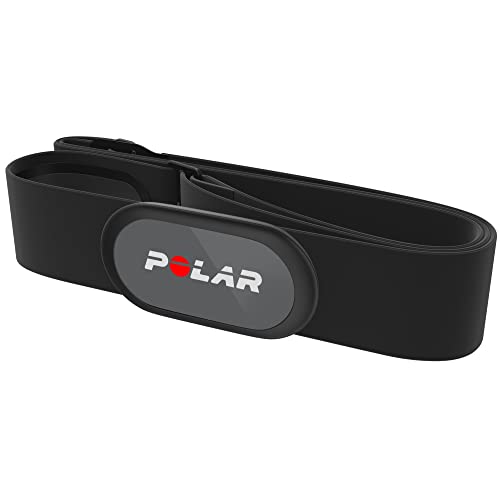


Estimate your blood alcohol concentration (BAC) with our free calculator. Enter your weight, gender, number of drinks, and time elapsed to see your estimated BAC level, impairment effects, and approximate time until sober. For educational purposes only.
Health & FitnessCalculate your Body Mass Index (BMI) instantly with our free online BMI calculator. Enter your height and weight to see your BMI category, healthy weight range, and what your results mean for your health.
Health & FitnessEstimate your body fat percentage using the U.S. Navy method with our free calculator. Enter your measurements to get body fat %, fat mass, lean mass, and your body composition category.
Health & FitnessCalculate your body surface area (BSA) using multiple formulas with our free calculator. Enter your height and weight to see BSA results from the Du Bois, Mosteller, Haycock, and Gehan-George methods, used in drug dosing, burn assessment, and clinical medicine.
Health & FitnessCalculate your daily calorie needs with our free calorie calculator. Uses the Mifflin-St Jeor equation to estimate BMR, maintenance calories, and targets for weight loss or gain based on your age, gender, height, weight, and activity level.
Health & FitnessEstimate your disability insurance needs and premium costs with our free calculator. Enter your income, age, coverage percentage, and elimination period to see projected monthly benefits, estimated premiums, and recommended emergency savings.
Health & FitnessEstimate your health insurance premiums with our free calculator. Compare Bronze, Silver, Gold, and Platinum plan costs based on your age, coverage tier, and deductible preferences. Understand ACA marketplace pricing and out-of-pocket maximums.
Health & FitnessEstimate your homeowners insurance premium with our free calculator. Enter your home value, deductible, and location risk level to see estimated annual and monthly costs, dwelling coverage, personal property coverage, and liability limits.
Health & FitnessCalculate your ideal body weight using multiple formulas with our free calculator. See results from the Devine, Robinson, Miller, and Hamwi methods based on your height, gender, and frame size, plus a healthy BMI weight range.
Health & FitnessEstimate your term life insurance premiums with our free calculator. Enter your age, coverage amount, term length, and health status to see monthly and annual premium estimates, total cost over the term, and coverage recommendations.
Health & FitnessCalculate your ideal macronutrient split with our free macro calculator. Get personalized protein, carbohydrate, and fat targets in grams and calories based on your TDEE, body weight, and fitness goals like fat loss, muscle gain, or maintenance.
Health & FitnessEstimate your one-rep max (1RM) for any lift with our free calculator. Enter the weight and reps from a recent set to see your estimated 1RM using the Epley, Brzycki, and Lombardi formulas, plus training load percentages for strength, hypertrophy, and endurance.