Body Fat Calculator
Estimate your body fat percentage using the U.S. Navy method with our free calculator. Enter your measurements to get body fat %, fat mass, lean mass, and your body composition category.
Body Fat Calculator: Example Calculation
Using Gender: Male, Height (feet): 5, Height (inches): 10, Weight: 180:
The estimated Body Fat is 17.5% (Category: Fit).
| Result | Value |
|---|---|
| Body Fat | 17.5% |
| Category | Fit |
| Fat Mass | 31.5 lbs |
| Lean Mass | 148.5 lbs |
Adjust the values in the calculator above for your own scenario.
Loading calculator
Preparing Body Fat Calculator...
Reviewed & Methodology
Every calculator is built using industry-standard formulas, validated against authoritative sources, and reviewed for accuracy against our published methodology. All calculations run privately in your browser - no data is stored or shared.
How to Use the Body Fat Calculator
- 1. Select your gender - body fat formulas differ for men and women due to different fat distribution patterns.
- 2. Enter your height - input your height in feet/inches or centimeters.
- 3. Enter circumference measurements - measure your waist at the navel, neck at the narrowest point, and (for women) hips at the widest point using a cloth tape measure.
- 4. Enter your weight - input your current weight to calculate fat mass and lean mass in pounds or kilograms.
- 5. Review your results - see your body fat percentage, category (essential, athlete, fit, average, or obese), fat mass, and lean mass.
Body Fat Calculator
Body weight alone does not tell you much about your health -- two people can weigh exactly the same and have completely different body compositions. This calculator uses the U.S. Navy circumference method to estimate your body fat percentage, fat mass, and lean mass from a few tape measurements. It takes about 2 minutes, requires no special equipment, and gives you a far more useful number than weight or BMI alone. Track it over time to see whether you are losing fat, gaining muscle, or both.
How Body Fat Is Calculated
The U.S. Navy method uses a logarithmic formula based on circumference measurements taken in inches. The formulas differ by gender because women naturally carry essential fat in the hips and chest.
Men: BF% = 86.010 x log10(waist -- neck) -- 70.041 x log10(height) + 36.76
Women: BF% = 163.205 x log10(waist + hip -- neck) -- 97.684 x log10(height) -- 78.387
- Waist: measured at the navel (men) or narrowest point (women)
- Neck: measured just below the larynx, sloping slightly downward
- Hip (women only): measured at the widest point of the buttocks
- Height: standing height without shoes
Once body fat percentage is calculated, fat mass and lean mass are derived directly: Fat Mass = Body Weight x (BF% / 100), and Lean Mass = Body Weight -- Fat Mass.
Worked Examples
Example 1 -- Male at average fitness. David is 5'10" (70 inches), weighs 185 lbs, with a 35-inch waist and 15.5-inch neck. Plugging into the Navy formula: BF% = 86.010 x log10(35 -- 15.5) -- 70.041 x log10(70) + 36.76 = approximately 20.3%. That puts him in the "average" category. His fat mass is roughly 37.6 lbs and lean mass 147.4 lbs. To reach the "fit" threshold of 18%, he would need to lose approximately 4-5 lbs of fat while maintaining lean mass.
Example 2 -- Female athlete tracking progress. Sofia is 5'6" (66 inches), weighs 142 lbs, with a 28-inch waist, 13-inch neck, and 37-inch hip measurement. Her calculated BF% is approximately 21.5%, placing her firmly in the "fit" category for women. Her lean mass comes to roughly 111.5 lbs. After 12 weeks of resistance training and a modest calorie deficit, she remeasures at 27.5-inch waist and the result drops to 19.2% -- a clear sign the program is working even though her scale weight dropped only 3 lbs.
Example 3 -- Older man rechecking after weight loss. Ray is 60 years old, 5'9" (69 inches), 168 lbs after losing 22 lbs over 6 months. His waist is 33 inches and neck is 15 inches. His Navy BF% comes out to approximately 17.8%, in the "fit" range. Importantly, his lean mass is 138 lbs -- a sign he preserved most of his muscle during the cut, which is the outcome to aim for.
Reference Table
| Gender | Height | Waist | Neck | Hip | Weight | BF% | Category |
|---|---|---|---|---|---|---|---|
| Male | 5'8" | 30 in | 15.5 in | -- | 165 lbs | ~12.8% | Athletic |
| Male | 5'10" | 33 in | 15.5 in | -- | 180 lbs | ~17.1% | Fit |
| Male | 5'10" | 36 in | 15 in | -- | 195 lbs | ~22.4% | Average |
| Male | 6'0" | 40 in | 15 in | -- | 220 lbs | ~28.1% | Obese |
| Female | 5'4" | 27 in | 13 in | 36 in | 130 lbs | ~18.9% | Athletic |
| Female | 5'5" | 30 in | 13 in | 38 in | 145 lbs | ~23.6% | Fit |
| Female | 5'6" | 33 in | 13 in | 40 in | 155 lbs | ~29.4% | Average |
| Female | 5'7" | 37 in | 13 in | 43 in | 170 lbs | ~35.8% | Obese |
| Male | 5'11" | 32 in | 16 in | -- | 175 lbs | ~14.9% | Fit |
| Female | 5'3" | 25 in | 12.5 in | 34 in | 118 lbs | ~16.2% | Athletic |
When to Use This Calculator
- Setting a realistic fat loss goal -- knowing your current fat mass lets you set a specific target (e.g., "I want to lose 15 lbs of fat and keep my 130 lbs of lean mass") instead of chasing an arbitrary scale number
- Tracking body recomposition -- if you are building muscle and losing fat simultaneously, your weight may barely change, but body fat percentage will drop, showing the real progress
- Evaluating diet effectiveness -- run the calculator every 4-6 weeks during a cut to confirm you are losing fat, not just muscle and water
- Assessing health risk -- high body fat, especially in the abdomen, correlates with elevated risk for type 2 diabetes and cardiovascular disease; knowing your number gives you a concrete metric to improve
- Adjusting calorie and protein targets -- lean body mass, not total body weight, is the basis for accurate protein recommendations; this calculator gives you that number directly
Common Mistakes to Avoid
-
Measuring inconsistently. Taking your waist measurement 2 inches above or below the navel can shift your result by 2-3 percentage points. Always measure at the same anatomical landmark -- men at the navel, women at the narrowest point -- and do it at the same time of day, ideally in the morning before eating.
-
Pulling the tape too tight or too loose. The tape should be snug against the skin without compressing it. A half-inch error on the waist measurement alone can change the result by 1-2 percentage points. Have someone else take the measurement if possible, or use a mirror to confirm the tape is level.
-
Expecting lab-level accuracy. The Navy method is accurate within 3-4% compared to DEXA scans for most people. A result of 22% could mean your actual body fat is anywhere from 18-26%. Use it as a tracking tool, not an absolute diagnostic. If you need clinical precision, consult a healthcare provider about a DEXA scan.
-
Ignoring the hip measurement for women. Skipping the hip measurement when using the women's formula produces a completely invalid result. The hip circumference is a core variable in the logarithmic calculation, not an optional input.
Understanding Your Results
Body fat percentage is categorized as follows. These ranges are well-established but note that athletes and older adults may fall outside them for non-health reasons -- a healthcare provider can give context specific to your situation.
Men: Essential fat: 2-5% | Athletic: 6-13% | Fit: 14-17% | Average: 18-24% | Obese: 25%+
Women: Essential fat: 10-13% | Athletic: 14-20% | Fit: 21-24% | Average: 25-31% | Obese: 32%+
Your lean mass number is particularly useful -- it is the basis for calculating your protein needs (typically 0.7-1.0g per pound of lean mass for active individuals) and helps you track whether you are preserving muscle during a fat loss phase.
Tips
- Measure at the same time of day -- morning before eating gives the most consistent baseline since hydration and meals affect soft tissue measurements
- Use a flexible cloth tape measure, not a metal one; keep it level and parallel to the floor for all measurements
- For women, the hip measurement at the widest point of the buttocks is essential -- do not use the hip bone or waist measurement instead
- Track every 4-6 weeks rather than week-to-week; day-to-day fluctuations from water retention can easily be 1-2% and will obscure real trends
- Pair your body fat result with lean mass to set protein targets -- aim for 0.7-1.0g of protein per pound of lean mass per day if you are active
- If your body fat is above 30% (men) or 35% (women), consult a healthcare provider before starting an aggressive diet or exercise program to rule out underlying health conditions
Frequently Asked Questions
What is a healthy body fat percentage for men and women?
Healthy body fat ranges differ significantly by gender. For men, 6-13% is considered athletic, 14-17% is fit, 18-24% is average, and above 25% is obese. For women, 14-20% is athletic, 21-24% is fit, 25-31% is average, and above 32% is obese. Women require higher essential fat (10-13%) compared to men (2-5%) due to reproductive and hormonal functions. These ranges shift slightly with age -- older adults can carry a few percentage points more and still be considered healthy.
How accurate is the U.S. Navy body fat method compared to other methods?
The Navy method is accurate within 3-4% of DEXA scan results for most people, making it one of the best non-invasive estimation techniques. It is more reliable than single-site skinfold calipers but less precise than hydrostatic weighing or DEXA scans. Its main advantage is accessibility -- you only need a tape measure. For the most accurate Navy method results, take measurements at the same time of day and ensure consistent tape placement.
What is the difference between essential fat and storage fat?
Essential fat is the minimum amount of body fat needed for basic physiological functions including hormone production, organ insulation, and nervous system function. Men need at least 2-5% essential fat, and women need 10-13%. Storage fat is additional fat stored beneath the skin (subcutaneous) and around organs (visceral) as energy reserves. Dropping below essential fat levels is dangerous and can cause hormonal disruption, immune suppression, and organ damage.
How does age affect body fat percentage?
Body fat naturally increases with age even if weight stays the same, primarily due to declining muscle mass (sarcopenia) and hormonal changes. Between ages 20 and 60, men typically gain 1-2% body fat per decade, and women gain 1-3% per decade, particularly after menopause. A 25-year-old man at 15% body fat and a 55-year-old man at 20% can both be considered healthy for their respective age groups.
Why is body fat percentage more useful than BMI?
Body fat percentage directly measures your ratio of fat to total body weight, while BMI only uses height and weight without distinguishing muscle from fat. A 200-pound person at 12% body fat has a very different health profile than a 200-pound person at 35% body fat, even if they are the same height. Body fat percentage also better tracks fitness progress -- you might gain muscle and lose fat while your weight (and BMI) stays unchanged, but your body fat percentage would improve.
Explore More Health & Fitness Tools
BMI Calculator: Try our free bmi calculator for instant results.
Calorie Calculator: Try our free calorie calculator for instant results.
Heart Rate Calculator: Try our free heart rate calculator for instant results.
Health Insurance Calculator: Try our free health insurance calculator for instant results.
Disability Insurance Calculator: Try our free disability insurance calculator for instant results.
Life Insurance Calculator: Try our free life insurance calculator for instant results.
Cite this calculator
Copy this citation for papers, articles, or coursework:
Alex Crabinsky. "Body Fat Calculator." Numeraty, February 23, 2026, https://numeraty.com/body-fat-calculator/ Skinfold calipers
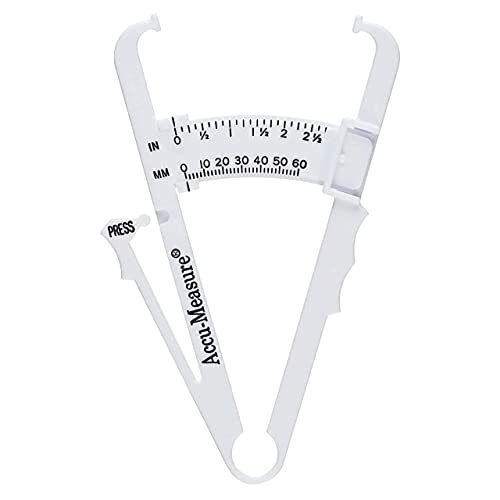
Inexpensive calipers for the pinch-test measurements this calculator uses, from the classic Accu-Measure to caliper-and-tape kits.
As an Amazon Associate, we earn from qualifying purchases. Prices and availability are subject to change. Prices checked Sep 9, 2026.

TrimCal 4000 In Stock
Sequoia Trimcal 4000 Body Fat Caliper with Tape Measure - Precision (Dual-Sided Design) for Fitness Tracking - Color Black & Black
$19.97 View on Amazon
MEDca In Stock
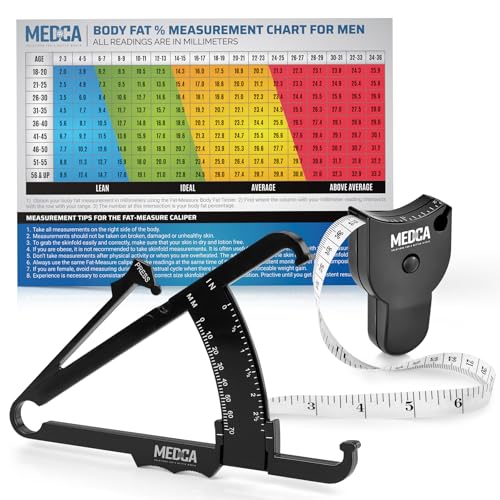
MEDca Body Fat Caliper and Measuring Tape for Body - Skinfold Calipers and Body Fat Tape Measure Tool for Accurately Measuring BMI Skin Fold Fitness and Weight-Loss, (Black)
$11.99 View on Amazon

RENPHO Available to ship in 1-2 days
RENPHO Smart Scale for Body Weight, BMI & Body Fat, 13 Metrics, Elis 1
$19.99 $23.99
−17%
View on Amazon
Related Health & Fitness Calculators
Health & Fitness
Blood Alcohol Calculator
Estimate your blood alcohol concentration (BAC) with our free calculator. Enter your weight, gender, number of drinks, and time elapsed to see your estimated BAC level, impairment effects, and approximate time until sober. For educational purposes only.
Health & FitnessBMI Calculator
Calculate your Body Mass Index (BMI) instantly with our free online BMI calculator. Enter your height and weight to see your BMI category, healthy weight range, and what your results mean for your health.
Health & FitnessBody Surface Area Calculator
Calculate your body surface area (BSA) using multiple formulas with our free calculator. Enter your height and weight to see BSA results from the Du Bois, Mosteller, Haycock, and Gehan-George methods, used in drug dosing, burn assessment, and clinical medicine.
Health & FitnessCalorie Calculator
Calculate your daily calorie needs with our free calorie calculator. Uses the Mifflin-St Jeor equation to estimate BMR, maintenance calories, and targets for weight loss or gain based on your age, gender, height, weight, and activity level.
Health & FitnessDisability Insurance Calculator
Estimate your disability insurance needs and premium costs with our free calculator. Enter your income, age, coverage percentage, and elimination period to see projected monthly benefits, estimated premiums, and recommended emergency savings.
Health & FitnessHealth Insurance Calculator
Estimate your health insurance premiums with our free calculator. Compare Bronze, Silver, Gold, and Platinum plan costs based on your age, coverage tier, and deductible preferences. Understand ACA marketplace pricing and out-of-pocket maximums.
Health & FitnessHeart Rate Calculator
Calculate your target heart rate zones for exercise with our free heart rate calculator. Uses the Tanaka formula and Karvonen method to determine your max heart rate and five personalized training zones based on age and resting heart rate.
Health & FitnessHome Insurance Calculator
Estimate your homeowners insurance premium with our free calculator. Enter your home value, deductible, and location risk level to see estimated annual and monthly costs, dwelling coverage, personal property coverage, and liability limits.
Health & FitnessIdeal Weight Calculator
Calculate your ideal body weight using multiple formulas with our free calculator. See results from the Devine, Robinson, Miller, and Hamwi methods based on your height, gender, and frame size, plus a healthy BMI weight range.
Health & FitnessLife Insurance Calculator
Estimate your term life insurance premiums with our free calculator. Enter your age, coverage amount, term length, and health status to see monthly and annual premium estimates, total cost over the term, and coverage recommendations.
Health & FitnessMacro Calculator
Calculate your ideal macronutrient split with our free macro calculator. Get personalized protein, carbohydrate, and fat targets in grams and calories based on your TDEE, body weight, and fitness goals like fat loss, muscle gain, or maintenance.
Health & FitnessOne Rep Max Calculator
Estimate your one-rep max (1RM) for any lift with our free calculator. Enter the weight and reps from a recent set to see your estimated 1RM using the Epley, Brzycki, and Lombardi formulas, plus training load percentages for strength, hypertrophy, and endurance.