
Currency Converter
Free Currency Converter - calculate instantly with our online tool. No signup required. Accurate unit converters calculations with real-time results.
Loading calculator
Preparing Currency Converter...
Reviewed & Methodology
Every calculator is built using industry-standard formulas, validated against authoritative sources, and reviewed for accuracy against our published methodology. All calculations run privately in your browser - no data is stored or shared.
How to Use the Currency Converter
- 1. Enter a value in the "From" field to begin your conversion.
- 2. Select your units - choose the source and target units from the dropdown menus.
- 3. View instant results - the conversion updates automatically as you type.
- 4. Swap direction - click the swap button to reverse the conversion.
- 5. Share your results - copy the link to save or share your conversion.
Currency Converter
This converter provides instant approximate conversions between 12 major world currencies: US Dollar, Euro, British Pound, Japanese Yen, Canadian Dollar, Australian Dollar, Swiss Franc, Chinese Yuan, Indian Rupee, Mexican Peso, South Korean Won, and Brazilian Real. Exchange rates shift every second in the $7.5 trillion-per-day forex market, so the rates here are mid-market reference values intended for budgeting, price comparison, and travel planning. For actual money transfers, always check the live rate from your bank or transfer service before confirming a transaction.
How Currency Conversion Works
All conversions route through USD as a shared base. The formula is: Result = Amount x (Source-to-USD rate) / (Target-to-USD rate). For example, converting 500 EUR to GBP first converts EUR to USD at roughly 1.08, giving $540, then converts $540 to GBP at roughly 0.787, yielding about 425 GBP. The mid-market rate sits exactly halfway between what a dealer buys and sells a currency for -- it is the fairest reference rate and the one used here. Banks and exchange counters typically add a 1-4% markup above mid-market, while services like Wise or Revolut charge 0.5-1.5%.
Worked Examples
A traveler preparing a two-week trip to Japan has a budget of $3,000. At a mid-market rate of approximately 149 JPY per USD, that converts to about 447,000 JPY -- a useful figure to compare against hotel prices quoted in yen. Note that an airport exchange kiosk charging 5% above mid-market would deliver only about 424,650 JPY for the same $3,000, a difference of over 22,000 JPY.
A UK-based freelancer invoices a US client for $8,500. With GBP/USD at approximately 1.27, the payment is worth about 6,693 GBP at mid-market. If the client pays via a bank wire with a 2.5% markup, the freelancer nets around 6,525 GBP -- a difference of 168 GBP, which illustrates why payment service fees matter on larger transfers.
A Canadian business importing goods from Germany quotes 15,000 EUR. With CAD/EUR at roughly 0.68, the cost translates to approximately 22,059 CAD at mid-market. Checking this figure before signing the purchase order prevents surprises when the invoice arrives in a different currency.
Expanded Reference Table
| From | To | Rate (approx) | $1,000 converted |
|---|---|---|---|
| USD | EUR | 0.926 | 926 EUR |
| USD | GBP | 0.787 | 787 GBP |
| USD | JPY | 149.5 | 149,500 JPY |
| USD | CAD | 1.36 | 1,360 CAD |
| USD | AUD | 1.54 | 1,540 AUD |
| USD | CHF | 0.897 | 897 CHF |
| USD | CNY | 7.25 | 7,250 CNY |
| USD | INR | 83.4 | 83,400 INR |
| USD | MXN | 17.1 | 17,100 MXN |
| USD | KRW | 1,325 | 1,325,000 KRW |
When to Use This Converter
- Travel budgeting -- estimate how far your home currency goes in a destination country before booking flights and hotels
- International shopping -- convert foreign prices to your home currency to compare value across retailers in different countries
- Invoice and payroll checks -- quickly verify the approximate home-currency value of a foreign payment before it arrives
- Price comparison -- compare the cost of goods or services quoted in multiple currencies side by side
- Rate monitoring -- use this as a quick reference to spot whether a rate you have been quoted is in the right ballpark
Common Mistakes to Avoid
- Confusing mid-market with the rate you will actually get. Banks, exchange counters, and card networks all add a markup of 1-5% above the mid-market reference shown here. Always request the all-in rate including fees before any transaction.
- Accepting dynamic currency conversion. When a merchant abroad offers to charge your card in your home currency, decline -- this adds a hidden 3-5% conversion fee. Let your card issuer handle the conversion instead.
- Ignoring transfer fees on small amounts. A $15 flat fee on a $200 transfer equals 7.5% of the total, dwarfing any rate difference. Fee structures matter far more than rate precision on small sums.
- Using stale rates for large decisions. The rates in this converter are reference approximations. For transactions above $5,000, check a live feed from a reputable source before committing.
Quick Reference Benchmarks
- 1 USD buys approximately 0.93 EUR, 0.79 GBP, or 149 JPY (2025 mid-market)
- 1 EUR is worth roughly 1.08 USD -- the pair is the most traded in the world
- 1 GBP is worth roughly 1.27 USD
- Moving money internationally via Wise typically costs 0.4-1.5% above mid-market
- Airport kiosks typically cost 5-10% above mid-market
- The spread on major pairs like EUR/USD in the interbank market is as low as 0.0001 (1 pip)
Tips
- Use the swap button after every conversion to double-check the reverse rate -- if converting 1,000 USD to EUR gives 926 EUR, then swapping should give roughly 1,080 EUR back to USD
- For large transactions, get quotes from at least three providers: your bank, a specialist service like Wise, and a currency broker -- the differences on $10,000 can exceed $200
- When shopping online in a foreign currency, convert the total including shipping before checkout to avoid underestimating the real cost
- Set rate alerts with a service like XE or Google Finance when you are waiting for a favorable rate before a major conversion
- Note that some currencies have two rates -- an official rate and a market rate -- in countries with currency controls (Argentina, for example); the rate here reflects the standard market rate
- For recurring international payments like subscriptions or salaries, batch them on the same day each month to simplify accounting and reduce the number of conversion fees
Frequently Asked Questions
Where do exchange rates come from and how often do they change?
Exchange rates are determined by the foreign exchange (forex) market, the largest financial market in the world with over $7 trillion traded daily. Rates fluctuate continuously during trading hours based on supply and demand, economic data, interest rates, and geopolitical events. The mid-market rate (the midpoint between buy and sell prices) is the fairest reference rate. Banks and exchange services add a markup of 1-4% above the mid-market rate.
What is the difference between the bid and ask price in currency exchange?
The bid price is what the exchange service will pay you for foreign currency (the lower rate), and the ask price is what they will charge you to buy foreign currency (the higher rate). The difference is called the spread, and it is how exchange providers earn their profit. For major currency pairs like EUR/USD, the spread is typically 0.01-0.05%, but retail exchange counters at airports may have spreads of 5-10%.
How can I minimize fees when converting currency?
Use online transfer services (like Wise or Revolut) that offer rates close to mid-market with low fees, typically 0.5-1.5%. Avoid airport exchange counters, which charge 5-10% above mid-market. When using credit cards abroad, choose cards with no foreign transaction fees. Always decline the merchant's offer to charge in your home currency (dynamic currency conversion), as this adds a 3-5% hidden markup.
Is there a best time to convert currency?
Currency rates fluctuate constantly, and timing the market is extremely difficult. However, rates tend to be slightly more favorable during high-liquidity periods when major financial markets overlap (8 AM - 12 PM EST, when both London and New York are trading). Avoid converting on weekends or holidays when markets are closed and spreads may be wider. For large amounts, consider setting rate alerts and converting when a favorable rate appears.
What are the basics of forex and how do currency pairs work?
Forex (foreign exchange) trading involves buying one currency while selling another, expressed as pairs like EUR/USD. The first currency is the base and the second is the quote -- EUR/USD = 1.08 means 1 euro buys 1.08 US dollars. Major pairs involve the USD (EUR/USD, GBP/USD, USD/JPY), and they are the most liquid with the tightest spreads. Understanding currency pairs helps you interpret exchange rates and compare offers from different providers.
Explore More Unit Converters Tools
Temperature Converter: Try our free temperature converter for instant results.
Length Converter: Try our free length converter for instant results.
Weight Converter: Try our free weight converter for instant results.
Volume Converter: Try our free volume converter for instant results.
Area Converter: Try our free area converter for instant results.
Speed Converter: Try our free speed converter for instant results.
Cite this calculator
Copy this citation for papers, articles, or coursework:
Alex Crabinsky. "Currency Converter." Numeraty, February 23, 2026, https://numeraty.com/currency-converter/ Travel adapters
Universal international power adapters for trips across borders and time zones.
As an Amazon Associate, we earn from qualifying purchases. Prices and availability are subject to change. Prices checked Sep 9, 2026.

Ceptics In Stock
Ceptics 45W Universal Travel Adapter w/ 3 USB-A, 2 USB-C & Universal Input
$22.99 View on Amazon
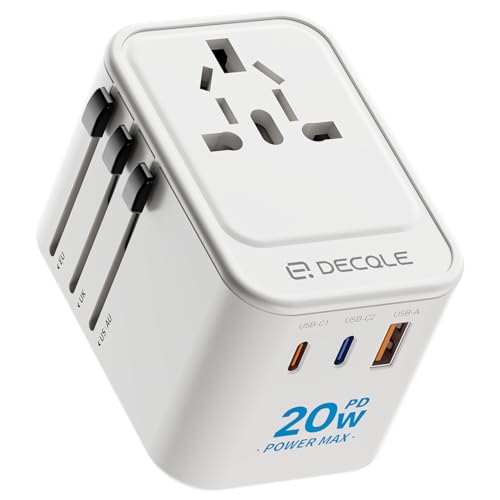
decqle In Stock
decqle Universal Travel Adapter, 2 USB-C & 1 USB-A, Cover 200+ Countries
$12.99 View on Amazon
Related Unit Converters Calculators
Unit Converters
Acceleration Converter
Free Acceleration Converter - calculate instantly with our online tool. No signup required. Accurate unit converters calculations with real-time results.
Unit ConvertersAngle Converter
Free Angle Converter - calculate instantly with our online tool. No signup required. Accurate unit converters calculations with real-time results.
Unit ConvertersArea Converter
Free Area Converter - calculate instantly with our online tool. No signup required. Accurate unit converters calculations with real-time results.
Unit ConvertersCase Converter
Free Case Converter - calculate instantly with our online tool. No signup required. Accurate unit converters calculations with real-time results.
Unit ConvertersClothing Size Converter
Free Clothing Size Converter - convert between US, EU, UK, and Asian clothing sizes for men and women. Compare international size charts for tops, dresses, pants, and outerwear when shopping online.
Unit ConvertersColor Converter
Free Color Converter - convert between HEX, RGB, HSL, and HSV color formats instantly. Essential for web developers and designers working with CSS, design tools, and accessibility-compliant color palettes.
Unit ConvertersCooking Converter
Free Cooking Converter - convert cups to grams, tablespoons to milliliters, ounces to grams, and more. Instantly translate between US, metric, and UK cooking measurements for accurate recipes.
Unit ConvertersData Storage Converter
Free Data Storage Converter - calculate instantly with our online tool. No signup required. Accurate unit converters calculations with real-time results.
Unit ConvertersData Transfer Converter
Free Data Transfer Converter - calculate instantly with our online tool. No signup required. Accurate unit converters calculations with real-time results.
Unit ConvertersDensity Converter
Free Density Converter - calculate instantly with our online tool. No signup required. Accurate unit converters calculations with real-time results.
Unit ConvertersEnergy Converter
Free Energy Converter - calculate instantly with our online tool. No signup required. Accurate unit converters calculations with real-time results.
Unit ConvertersFlow Converter
Free Flow Converter - calculate instantly with our online tool. No signup required. Accurate unit converters calculations with real-time results.