
Adams Media In Stock
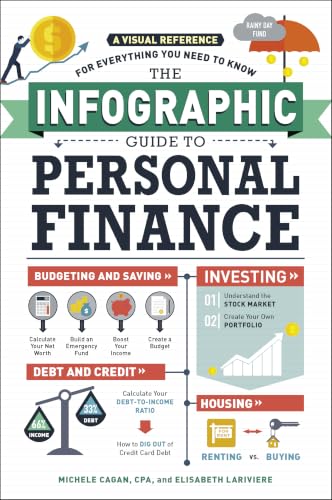
Personal Finance 101: From Saving and Investing to Taxes and Loans, an Essential Primer on Personal Finance (Adams 101 Series)
$11.25 $16.99
−34%
View on Amazon
Use our free Loan Comparison Calculator to compare two loan offers side by side. See monthly payments, total interest, and total cost to determine which loan saves you more money.
Using Loan A Amount: $25,000, Loan A Rate: 6.5, Loan A Term: 5, Loan B Amount: $25,000:
The estimated Better Overall Value is Loan B (Saves $1,146 in total cost).
| Result | Value |
|---|---|
| Better Overall Value | Loan B |
| Loan A Payment | $489 |
| Loan B Payment | $783 |
| Loan A Interest | $4,349 |
| Loan B Interest | $3,203 |
Adjust the values in the calculator above for your own scenario.
Preparing Loan Comparison Calculator...
Every calculator is built using industry-standard formulas, validated against authoritative sources, and reviewed for accuracy against our published methodology. All calculations run privately in your browser - no data is stored or shared.
Educational tool only -- not financial, tax, or legal advice. Consult a licensed professional for decisions about your situation.
Two loan offers can look similar on the surface -- same amount, rates within a point of each other -- and still differ by thousands of dollars in total cost. The difference usually comes from term length, which determines how long interest accrues. This calculator puts any two loan offers side by side and computes monthly payment, total interest, and total paid for each, so the better deal is immediately clear rather than buried in lender paperwork.
Both loans use the standard amortization formula:
M = P x [r(1+r)^n] / [(1+r)^n - 1]
Where M is the monthly payment, P is the principal loan amount, r is the monthly interest rate (annual APR divided by 12, then divided by 100), and n is the total number of monthly payments (years x 12).
Total Interest = (M x n) - P
Total Cost = P + Total Interest
The calculator identifies the winner as the loan with the lower total cost. If the loan with higher monthly payments saves more money overall, it flags that tradeoff explicitly so you can weigh affordability against long-term savings.
Example 1 -- Auto loan: lower rate vs. shorter term
Both offers are for $22,000.
Loan A: 5.9% APR, 60 months. Monthly payment: $424. Total interest: $3,440. Total paid: $25,440.
Loan B: 7.4% APR, 36 months. Monthly payment: $682. Total interest: $1,552. Total paid: $23,552.
Loan B costs $258 more per month but saves $1,888 in total. If the $258/month difference is manageable, Loan B is the better financial decision.
Example 2 -- Personal loan for debt consolidation
Borrowing $18,000 to consolidate credit card debt.
Loan A: 9.5% APR, 60 months. Monthly payment: $378. Total interest: $4,680. Total paid: $22,680.
Loan B: 11.9% APR, 48 months. Monthly payment: $473. Total interest: $4,704. Total paid: $22,704.
Effectively a tie in total cost ($24 difference), but Loan A has a lower monthly payment and frees up $95/month in cash flow. In this case, Loan A wins on both total cost and affordability.
Example 3 -- Home improvement loan: wide term spread
Borrowing $35,000 for a kitchen renovation.
Loan A: 7.0% APR, 84 months (7 years). Monthly payment: $527. Total interest: $9,268. Total paid: $44,268.
Loan B: 7.5% APR, 48 months (4 years). Monthly payment: $847. Total interest: $5,656. Total paid: $40,656.
Despite Loan B's higher rate, its shorter term saves $3,612 in total cost. The monthly payment is $320 higher -- whether that tradeoff is worthwhile depends on budget.
| Loan Amount | Loan A Rate / Term | Loan A Payment | Loan A Total Interest | Loan B Rate / Term | Loan B Payment | Loan B Total Interest | Cheaper Option |
|---|---|---|---|---|---|---|---|
| $10,000 | 6.0% / 36 mo | $304 | $944 | 8.0% / 24 mo | $452 | $848 | Loan B (saves $96) |
| $15,000 | 7.0% / 48 mo | $359 | $2,232 | 9.0% / 36 mo | $477 | $2,172 | Loan B (saves $60) |
| $20,000 | 6.5% / 60 mo | $391 | $3,460 | 8.5% / 48 mo | $498 | $3,904 | Loan A (saves $444) |
| $25,000 | 6.5% / 60 mo | $489 | $4,357 | 8.0% / 36 mo | $783 | $3,194 | Loan B (saves $1,163) |
| $30,000 | 7.0% / 72 mo | $525 | $7,800 | 8.0% / 60 mo | $608 | $6,480 | Loan B (saves $1,320) |
| $40,000 | 6.0% / 84 mo | $591 | $9,644 | 7.5% / 60 mo | $801 | $8,060 | Loan B (saves $1,584) |
| $50,000 | 5.5% / 120 mo | $541 | $14,920 | 7.0% / 84 mo | $749 | $12,916 | Loan B (saves $2,004) |
| $12,000 | 10.0% / 60 mo | $255 | $3,300 | 12.0% / 36 mo | $399 | $2,364 | Loan B (saves $936) |
| $8,000 | 8.0% / 48 mo | $195 | $1,360 | 10.0% / 36 mo | $258 | $1,288 | Loan B (saves $72) |
| $35,000 | 7.0% / 84 mo | $527 | $9,268 | 7.5% / 48 mo | $847 | $5,656 | Loan B (saves $3,612) |
Comparing monthly payments without looking at total cost. A loan with a $150 lower monthly payment can cost $5,000 more over its life if the term is two years longer. Always check the total paid column, not just the monthly number.
Ignoring origination fees and closing costs. A loan advertised at 7.0% with a 2% origination fee on $25,000 costs $500 upfront, which adds roughly 0.3--0.4% to the effective APR. Ask for the APR, not the stated rate, for a real comparison.
Not checking prepayment penalties. Some personal and auto loans include early payoff penalties of 1--3% of the remaining balance. If you plan to pay off the loan early, a loan without a penalty often beats a marginally lower rate with one.
Comparing loans for different amounts as if they are equivalent. If lenders are offering different amounts due to different approval criteria, adjust the comparison to the same principal before drawing conclusions.
Personal loan rates in 2026 vary widely: borrowers with credit scores above 750 can find rates of 7--10% APR on 3--5 year terms, while scores in the 620--680 range typically see 15--24% APR offers. The spread between top and bottom tiers is more than 15 percentage points, making credit score management as important as loan shopping. Auto loan rates averaged 7.1% for new vehicles and 11.4% for used vehicles in early 2026. Federal Reserve rate decisions in 2025 stabilized borrowing costs in the second half of the year, and most economists project rates to remain flat through mid-2026. In this environment, comparing total cost rather than chasing rate differentials of 0.25--0.5% is the more productive exercise for most borrowers.
Credit Card Payoff Calculator: Try our free credit card payoff calculator for instant results.
Student Loan Calculator: Try our free student loan calculator for instant results.
Personal Loan Calculator: Try our free personal loan calculator for instant results.
Debt Payoff Calculator: Try our free debt payoff calculator for instant results.
Debt To Income Ratio Calculator: Try our free debt to income ratio calculator for instant results.
Interest Rate Calculator: Try our free interest rate calculator for instant results.
Copy this citation for papers, articles, or coursework:
Alex Crabinsky. "Loan Comparison Calculator." Numeraty, February 23, 2026, https://numeraty.com/loan-comparison-calculator/ Clear, top-rated primers on saving, planning, and managing money.
As an Amazon Associate, we earn from qualifying purchases. Prices and availability are subject to change. Prices checked Sep 9, 2026.

Use our free Balance Transfer Calculator to see how much you can save by moving credit card debt to a 0% APR offer. Compare transfer fees, promo periods, and total cost.
Debt & LoansUse our free Credit Card Payoff Calculator to see how long it takes to pay off your balance, how much total interest you'll pay, and how extra payments accelerate your payoff timeline.
Debt & LoansUse our free Debt Avalanche Calculator to build a payoff plan that targets your highest-interest debt first. Minimize total interest paid and find your fastest path to debt freedom.
Debt & LoansUse our free Debt Consolidation Calculator to see if combining multiple debts into one loan saves money. Compare your current payments against a single consolidation loan with a lower rate.
Debt & LoansUse our free Debt Payoff Calculator to find your debt-free date, total interest cost, and how extra payments speed up your payoff. Plan a realistic strategy to eliminate debt faster.
Debt & LoansUse our free Debt Snowball Calculator to create a payoff plan that targets your smallest balances first. See your debt-free date, total interest cost, and the order to pay off each debt.
Debt & LoansUse our free Debt-to-Income Ratio Calculator to find your DTI percentage, understand how lenders evaluate your finances, and learn what DTI you need for mortgage approval.
Debt & LoansUse our free HELOC Payment Calculator to estimate interest-only and fully amortized payments during the draw and repayment periods. Plan for payment increases and total borrowing costs.
Debt & LoansUse our free Home Equity Loan Calculator to estimate monthly payments, total interest, and borrowing costs. See how much equity you can access and compare loan terms.
Debt & LoansUse our free Interest Rate Calculator to reverse-engineer the APR on any loan from the payment amount, loan balance, and term. Verify dealer financing offers and compare true borrowing costs.
Debt & LoansUse our free Minimum Payment Calculator to see the true cost of paying only the minimum on your credit card. Discover how long payoff takes and how much extra interest you pay.
Debt & LoansUse our free Payoff Date Calculator to find the exact date you will be debt-free. See how extra payments, biweekly schedules, and increased amounts move your payoff date forward.